
Myth-busting in Complex Regional Pain Syndrome

Myth-busting in Complex Regional Pain Syndrome
This course includes
The instructors
Overview
Complex Regional Pain Syndrome (CRPS) remains one of the most misunderstood and challenging chronic pain conditions in clinical practice. In this Embodia course, Myth Busting in Complex Regional Pain Syndrome, Marc Aureli Piqué Batalla delivers a comprehensive, evidence-informed exploration of CRPS that challenges long-standing misconceptions and reframes how clinicians approach diagnosis, treatment, and prognosis.
Drawing from clinical expertise and current research, this course dismantles common myths - including the belief that pain always equals tissue damage, that CRPS is purely localized to one limb, or that the condition is inevitably progressive and hopeless. Instead, it promotes a modern biopsychosocial understanding of CRPS, recognizing the complex interaction between nervous, vascular, autonomic, psychological, and social systems.
Clinicians will gain clarity around diagnostic challenges (including the use of the Budapest criteria), interdisciplinary treatment planning, and the pivotal role of patient education in reshaping beliefs, reducing fear, and improving outcomes.
Learning Objectives
By the end of this course, participants will be able to:
-
Describe the biological, psychological, and social contributors to CRPS.
-
Identify common myths surrounding CRPS and explain why they are inaccurate or incomplete.
-
Apply the Budapest criteria appropriately in the absence of objective biomarkers.
-
Recognize how patients’ beliefs about pain influence coping strategies and functional outcomes.
-
Integrate education, communication, and interdisciplinary collaboration into CRPS management.
-
Differentiate between adaptive and counterproductive coping strategies (e.g., “push through” vs. parasympathetic activation approaches).
-
Communicate prognosis in a realistic yet hopeful manner to support engagement in rehabilitation.
Audience
This course is designed for:
-
Physiotherapists
-
Occupational therapists
-
Chiropractors
-
Osteopaths
-
Physicians and pain specialists
-
Psychologists and mental health professionals
-
Interdisciplinary pain teams
-
Any healthcare professional working with persistent or complex pain conditions
Why This Course Matters
CRPS carries significant personal, societal, and economic burden. Misdiagnosis, misinformation, and fear-based narratives can intensify disability, psychological distress, and healthcare utilization.
This course matters because it:
-
Clarifies diagnostic uncertainty in a condition without objective biomarkers.
-
Replaces fear-based narratives with evidence-informed, patient-centered education.
-
Supports early, interdisciplinary intervention to reduce long-term disability.
-
Emphasizes communication skills that rebuild trust when patients feel unheard or invalidated.
-
Provides clinicians with practical frameworks to reshape unhelpful pain beliefs.
Approximately 30% of individuals with CRPS experience persistent long-term symptoms. The way clinicians frame pain, prognosis, and treatment can significantly influence coping, engagement, and functional outcomes.
By shifting from a purely biomedical model to a biopsychosocial framework, healthcare providers can help reduce stigma, self-blame, and avoidance behaviors while fostering active rehabilitation and resilience.
The instructors
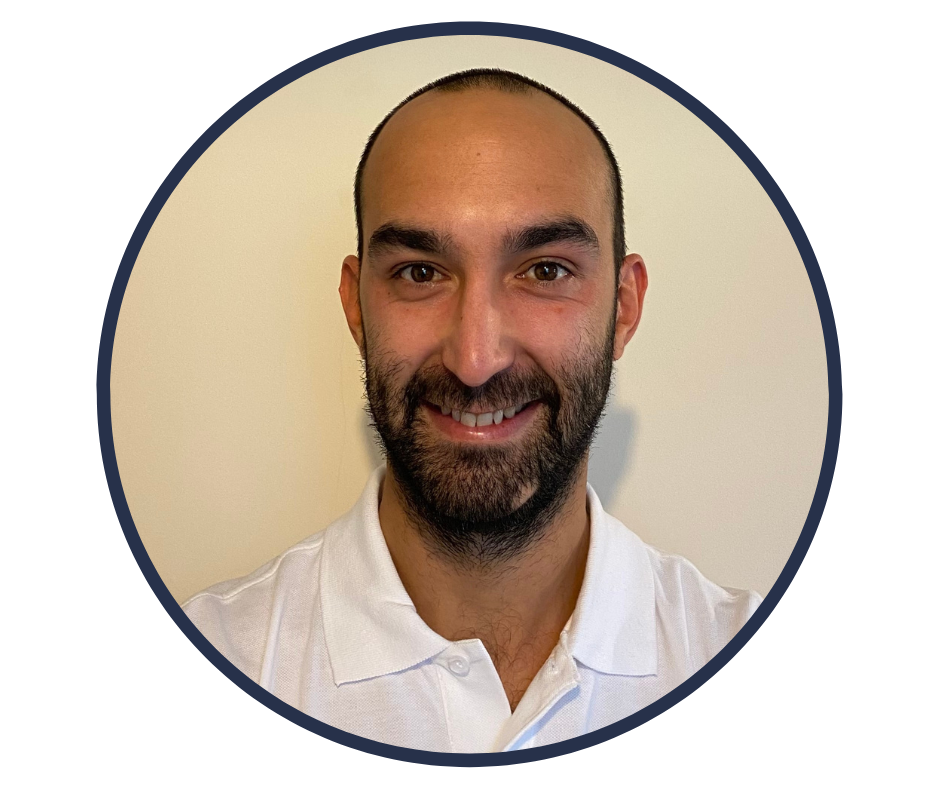
MSc (Health Science Research) BSc (Physiotherapist) MCSP
Marc is a physiotherapist, researcher, and lecturer with over ten years of experience on the treatment of long-term complex conditions, including neurological and chronic pain syndromes.
He has an MSc in Health Science Research and he is currently undertaking a PhD exploring the relationship between cognition, human movement and pain. Marc teaches across a variety of clinical settings and countries.
Marc is a dedicated lecturer committed to providing evidence-based education to a wide variety of health professionals. He is Cognitive Multisensory Rehabilitation instructor certified by the International Cognitive Multisensory Rehabilitation Association.
You can find Marc on X (@PiqueBatalla)
Material included in this course
-
Welcome and Resources
-
Welcome and Slides
-
Course Materials
-
Complex Regional Pain Syndrome
-
Accessing Trustworthy Information
-
Myth Busting
-
Conclusion
-
Feedback
-
Summary, Exam, and Course Evaluation
-
Summary and Key Insights
-
Course References
-
Exam
-
Course evaluation
Is a certificate of completion included with this course?
Once you have completed the course, a certificate of completion (including learning hours and course information) will be generated. You can download this certificate at any time. To learn more about course certificates on Embodia please visit this guide.
This can be used for continuing education credits, depending on your professional college or association. If this course has been approved for CEUs in specific jurisdictions, it will be noted on the course page and CEU information may be added to your course certificate. Please read this guide for more information.
Has this course been approved for CEUs (Continuing Education Units) for Physical Therapists and Physical Therapy Assistants in the US?
Yes, Embodia is a rule-approved CE provider of the PT Board of Florida (# 50-54793), a licensed CE sponsor of physical therapy continuing education by the Illinois Department of Financial & Professional Regulation (IDFPR #216.000415), an approved provider of continuing education by APTA Massachusetts, an approved provider of the Oklahoma Board of Medical Licensure & Supervision - Physical Therapy (#50-54793), and an approved provider of continuing education for Physical Therapists and Physical Therapist Assistants in California (CA) by CEUapproval.com, a recognized approval agency of the Physical Therapy Board of CA.
Courses approved by other state boards in the following jurisdictions are likely accepted for licensure credit based on the state regulation:
AL | AK | AR | CO | CT | DE | GA | HI | ID | IL | IN | IA | KS | KY | ME | MA | MI | MO | MT | NE | NH | NC | ND | OK | OR | PA | RI | SC | SD | UT | VT | VA | VI | WA | WI | WY
Please reach out to your state licensing board to confirm. If you have a specific question about CEU approval for this course in your state, please direct your inquiry to info@ceuapproval.com
The following states are not pre-approved: AZ, DC, LA, MD, MN, MS, NM, NV, NY, NJ, OH, TX, WV
Participants licensed in states not pre-approved may file for individual approval using the instructions on this document.
US PTs and PTAs: How many CEUs has this course been approved for?
This course has been approved for 1 CEUs (Continuing Education Units) for Physical Therapists and Physical Therapy Assistants in the US. Please see the FAQ 'Has this course been approved for CEUs (Continuing Education Units) for Physical Therapists and Physical Therapy Assistants in the US?' for a detailed list of the approved states. In order for your US jurisdiction information to appear on your course certificate, you must complete your jurisdiction information on your Embodia profile as per this guide.